
Inside studienkolleg.org: the Preparation stop
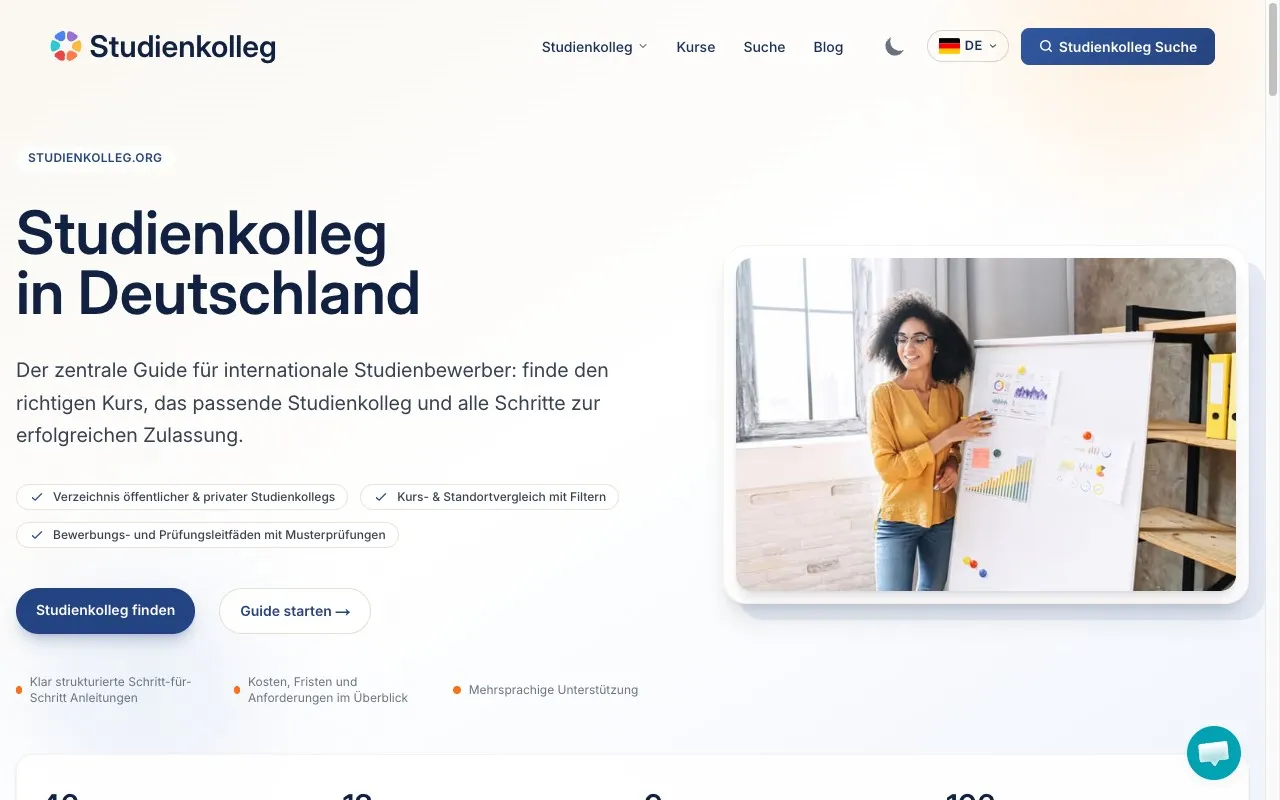
46 Studienkollegs, 106 sample exams, 9 course types: how www.studienkolleg.org prepares you for the Feststellungsprüfung and admission in Germany.
On this page
Many school-leaving qualifications from abroad aren’t enough to start studying in Germany right away. In that case, your route runs through the Studienkolleg (preparatory college): one year of preparation, two semesters, and the Feststellungsprüfung (qualifying assessment) at the end. Only once you’ve passed it is the way to university open.
That’s exactly what www.studienkolleg.org is for — stop 4 on our journey, Preparation. The portal explains what a Studienkolleg is, helps you find the right one, and walks you through the application.
That sounds like a lot of bureaucracy, and it is. All the more reason to know early on which course matches the degree you’re aiming for and which deadlines apply.
What the portal is for
www.studienkolleg.org sees itself as the central guide for international applicants — helping you choose the right course, find the right Studienkolleg and prepare for admission.
Behind it sits a simple three-step model: settle on the course first, then find the Studienkolleg, then apply. That order is no small detail. Which focus track is right for you depends on the subject you plan to study later — and not every Studienkolleg offers every course.
The portal is available in ten languages, including German, English, Spanish, Chinese, Arabic and Hindi. For a topic that affects almost exclusively international applicants, that’s not a nice-to-have — it’s a basic requirement. In the footer, the site identifies itself as an arrimundo service — so it belongs to the same family as this website.
What you’ll actually find
The portal covers the path from your first question to a finished application:
- The basics: What a Studienkolleg is and how the Feststellungsprüfung works — explained at was-ist-ein-studienkolleg and feststellungspruefung.
- Course-type guide: All 9 focus tracks at a glance — the five university courses T, M, W, G and S, plus the four Fachhochschule (university of applied sciences) courses TI, WW, GD and SW (kurse). A course takes one year, i.e. two semesters, and ends with the Feststellungsprüfung.
- Directory: 46 Studienkollegs across 13 federal states (as of June 2026), public and private, filterable by state, course type, provider type, application route and language level (suche). The most widely offered are the T course (42 colleges), the W course (39) and the M course (31).
- Sample exams: 106 resources for the entrance exam and the Feststellungsprüfung, 99 of them free — material from over 25 Studienkollegs across 7 subjects, above all maths and German (musterpruefungen).
- Costs: A cost guide with an interactive cost calculator (kosten, kostenrechner).
- Application: A guide with deadlines, checklists, a template email and details on the entrance test (bewerbung).
On top of that, there’s an FAQ section and a blog with data analyses and checklists.
The honest maths: what the year costs
We also tell you what gets expensive. With the Studienkolleg, it pays to look closely:
| Item | Guide figure per the portal |
|---|---|
| Public Studienkolleg | usually tuition-free, semester fee €100–350 |
| Private Studienkolleg | approx. €3,500–6,500 per semester |
| Living costs | approx. €830–1,380 per month |
| Blocked account | €11,904 per year (€992/month, as of 2024) |
Important: prices at private colleges vary widely — in the directory, fees range from around €2,180 to €10,750. So don’t just compare names, compare numbers. The cost calculator helps you do exactly that.
Language requirements differ too: public Studienkollegs generally expect German at B1 level, while some private ones admit you with A2. The entrance exam tests German, maths and — depending on the course — subject knowledge.
Where this stop sits on the journey
Preparation is stop 4 of six. Before it comes stop 3, Funding: no blocked account, no visa — how to set one up is covered in our profile of www.flexblocked.com. The numbers interlock: the €11,904 quoted in www.studienkolleg.org’s cost guide is exactly the blocked-account amount from stop 3.
Then comes stop 5, Coverage: no health insurance, no enrolment. That’s what www.student-insurance.com takes care of — more in our profile of www.student-insurance.com.
And if your German isn’t at the required level yet, it’s worth looking back at stop 2, Language — more in our profile of www.sprachschule.org.
On timing, the portal gives you clear windows: public Studienkollegs accept applications for the winter semester from 15 January to 15 July, and for the summer semester from 15 July to 15 January. The portal puts the whole process at three to six months. To see how all six stops line up on the calendar, take a look at our timeline of the journey.
What the portal won’t do for you
Honest, even when it’s uncomfortable — that applies here too:
- Passing the entrance exam is on you. The sample exams are there to practise with. German and solid maths are things you need to bring — or build up beforehand.
- You submit the application yourself. The portal supplies deadlines, checklists and a template email — the planning and submitting are up to you. Allow three to six months.
- The final word always rests with the Kolleg itself. Language levels, fees and application routes vary by institution and can change. Check the details directly with the Studienkolleg of your choice before you commit.
- Nobody can guarantee you a place. The portal informs and puts things in context — it is not a placement agency and not an admissions office.
Your next step
If your diploma doesn’t get you straight into a German university, that’s not the end of the road — just a detour with clear rules. Get clarity on your course first, then on the right Kolleg, then on the application.
Start at www.studienkolleg.org — ideally with the basics page “What is a Studienkolleg?”. And if you want to see what the whole journey looks like, you’ll find the overview on our homepage.
Keep reading
Inside student-insurance.com: the Coverage stop
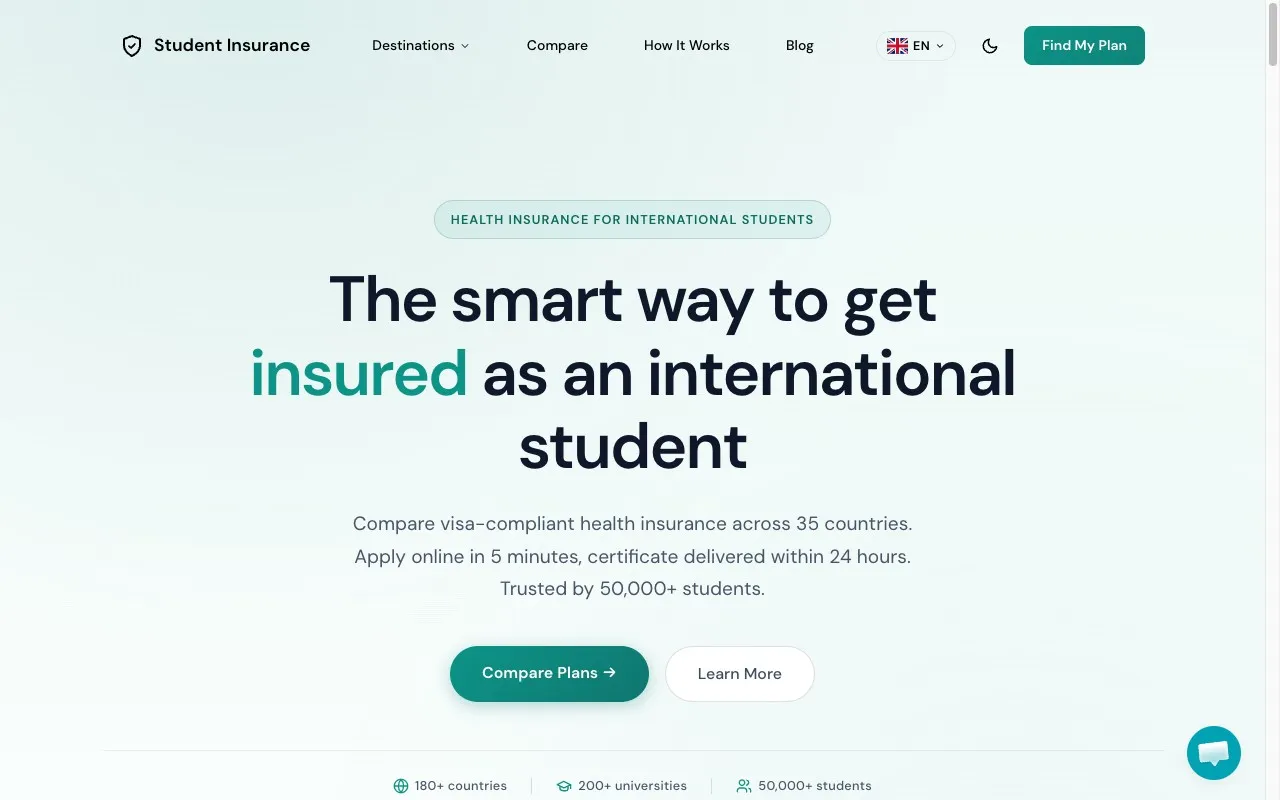
No health insurance, no enrolment: how www.student-insurance.com compares visa-compliant plans across 35 countries — stop 5 of the arrimundo journey.
Inside living-abroad.org: arriving in your new country
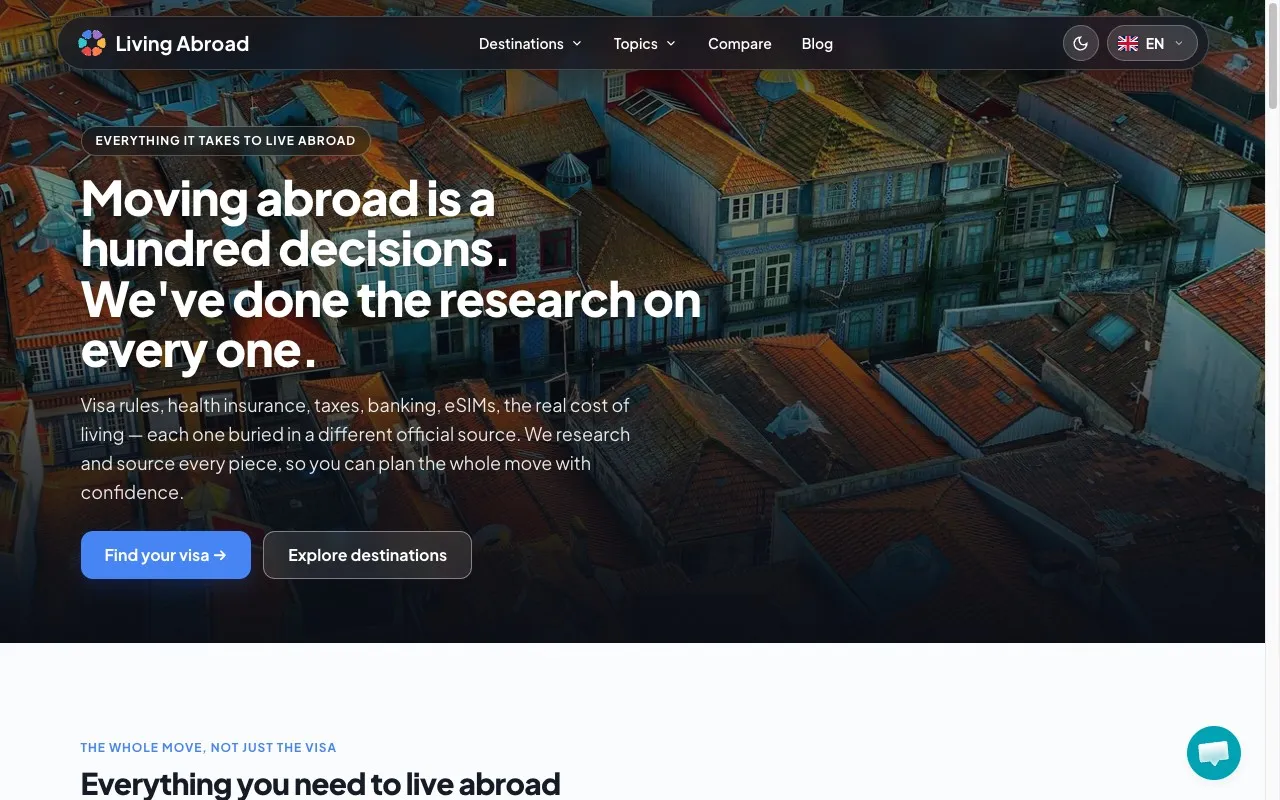
Registration, housing, bank account, daily life: www.living-abroad.org guides you through the first weeks abroad. What the portal offers — and what it doesn't.
Why arrimundo exists: six stops, one path abroad
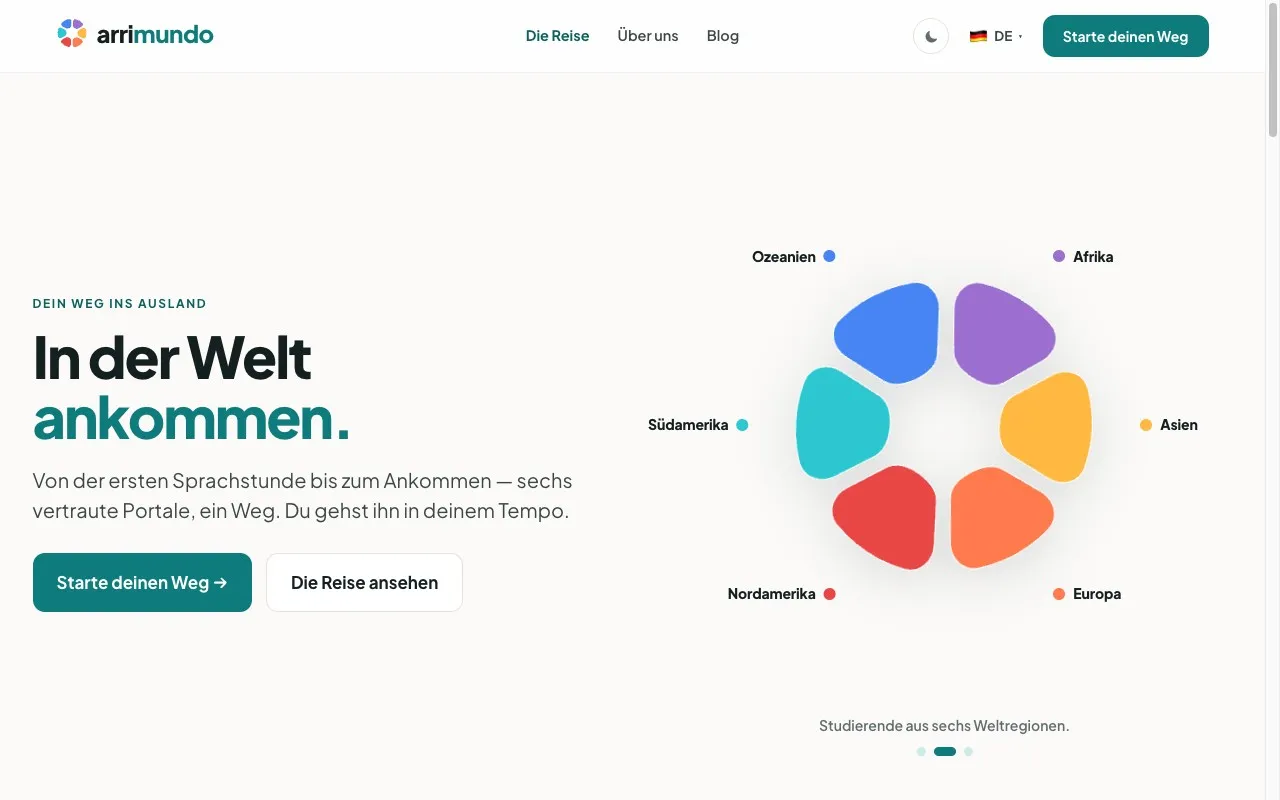
Six topics, six points of contact, one foreign language: the path to studying abroad is fragmented. Why arrimundo connects it into a single journey.
Ready for the next step?
Six stops, one path — find out where you stand right now.