
Inside student-insurance.com: the Coverage stop
No health insurance, no enrolment: how www.student-insurance.com compares visa-compliant plans across 35 countries — stop 5 of the arrimundo journey.
On this page
Your admission is in, the blocked account is set up, the flight is all but booked. And then one document is missing — one that many people underestimate: health insurance. Without it, there’s no student visa in many destination countries — and no enrolment at university.
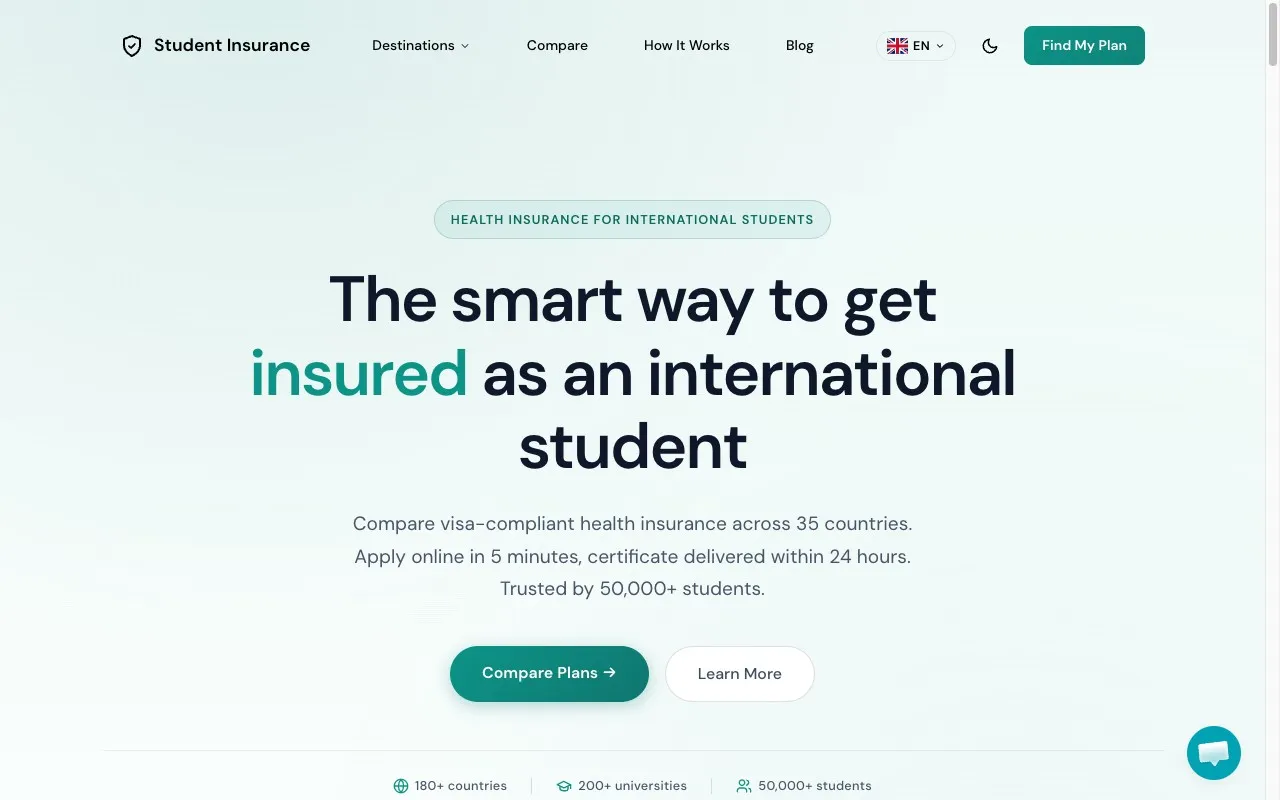
That’s exactly the problem stop 5 of the arrimundo journey solves: Coverage. The portal behind it is www.student-insurance.com. It helps you find health insurance that fits your destination country, your visa and your budget.
In this profile, we’ll show you what the portal can do, where it sits on your journey — and, honestly, what it can’t take off your plate.
Background and mission
student-insurance.com is an arrimundo service. Its tagline: “The smart way to get insured as an international student”. The mission behind it: making international education simpler, clearer, and safer for students around the world.
That fits what we’re trying to do at arrimundo as a whole: translate the fine print into plain language, so you know what you’re getting into. Insurance terms are the toughest test of that — hardly any topic is more packed with jargon, and hardly any has such direct consequences when something is missing.
By its own account, the portal has insured more than 50,000 students, works with over 200 university partners and reaches students from more than 180 countries. The website is available in ten languages, including a complete German version; support is multilingual too.
What the portal actually offers
At its core is a comparison: visa-compliant health insurance for 35 destination countries, side by side by coverage, price and benefits. Around it sit tools that make the choice easier:
- Insurance Finder: You answer a few questions, and the recommendation tool suggests an insurance plan that fits.
- Country pages for 35 destinations: What your destination country requires and what it costs — from Europe through North America and Asia to Australia and New Zealand.
- Online application: According to the portal, the application takes about 5 minutes, and the insurance certificate arrives within 24 hours. You’ll need that certificate for your visa and enrolment.
- Blog and resources: Guides to individual countries’ insurance requirements, plus statistics.
Germany as an example
Germany shows nicely how the portal works. The Germany page explains the ground rule: health insurance is mandatory for all students and a prerequisite for the student visa and residence permit, with a minimum coverage of €30,000. And it answers the question that sums up stop 5 on our homepage: public or private?
| Option | Who it’s for | Cost |
|---|---|---|
| Public (GKV) | Students under 30 | around €141 a month (2026: €141.16 to €146.29 at TK, AOK Bayern, BARMER, DAK) |
| Private (PKV) | Over-30s, language students, doctoral students | from €28 a month |
On top of that comes a detail that ties the stops together: the portal has its own information on the German blocked account (€11,904 per year) and names the providers Expatrio and Fintiba — in case you want to think about funding and insurance in one go.
Other countries, honest prices
For other destinations too, the portal gives you concrete figures instead of hiding them: in Australia, OSHC cover starts at AU$52 a month (AU$623 to AU$806 a year). In the UK you pay the Immigration Health Surcharge of £776 per year. In the USA, typical plans run from US$1,500 to US$3,000 a year — that’s a lot of money, and you should budget for it early.
Where this stop sits on your journey
Coverage is stop 5 of 6. Before it comes Preparation with studienkolleg.org: if your school-leaving qualification isn’t enough to start studying right away, your route runs through the Studienkolleg — and by the time you apply for its visa, you’ll need proof of insurance too.
After Coverage comes Arrival with living-abroad.org: registration, bank account, housing, daily life. You’ll need your insurance certificate again there — for enrolment and your residence permit, for example.
And as mentioned, this stop also reaches back to Funding: the blocked account and health insurance are often sorted out in the same step. To see exactly where each stop falls in the sequence, take a look at our timeline of all six stops.
Honestly: what the portal won’t do for you
We won’t promise you a shortcut that doesn’t exist. A few things stay with you:
- The decision. A comparison shows you options — choosing is up to you. A low price says nothing about the benefits. Read what’s included before you sign.
- The check by your university and the embassy. What exactly gets accepted is ultimately decided by your university and the visa office, not by a comparison portal. Always check their requirements on top.
- The insurer’s fine print. What’s binding is the policy you take out — not the comparison page. For questions about your specific case, only the insurer itself or independent advice can help.
- The costs. Health insurance is no minor line item. In the USA especially, it’s one of the bigger expenses of your study year. The portal makes the prices visible — you still have to pay them.
Part of that is being transparent about the portal’s own numbers: figures like “50,000+ students insured” or the 4.8-out-of-5 rating come from the portal itself.
Your next step
If Coverage is what’s next for you, start with your destination country: look up what’s mandatory there and what it costs. For Germany, the Germany page answers the public-or-private question; for every other destination, the Insurance Finder walks you through a few questions to a recommendation that fits.
You’ll find both here: www.student-insurance.com — in German at www.student-insurance.com/de/. And once your insurance is in place, the final stop is already waiting: Arrival.
Keep reading
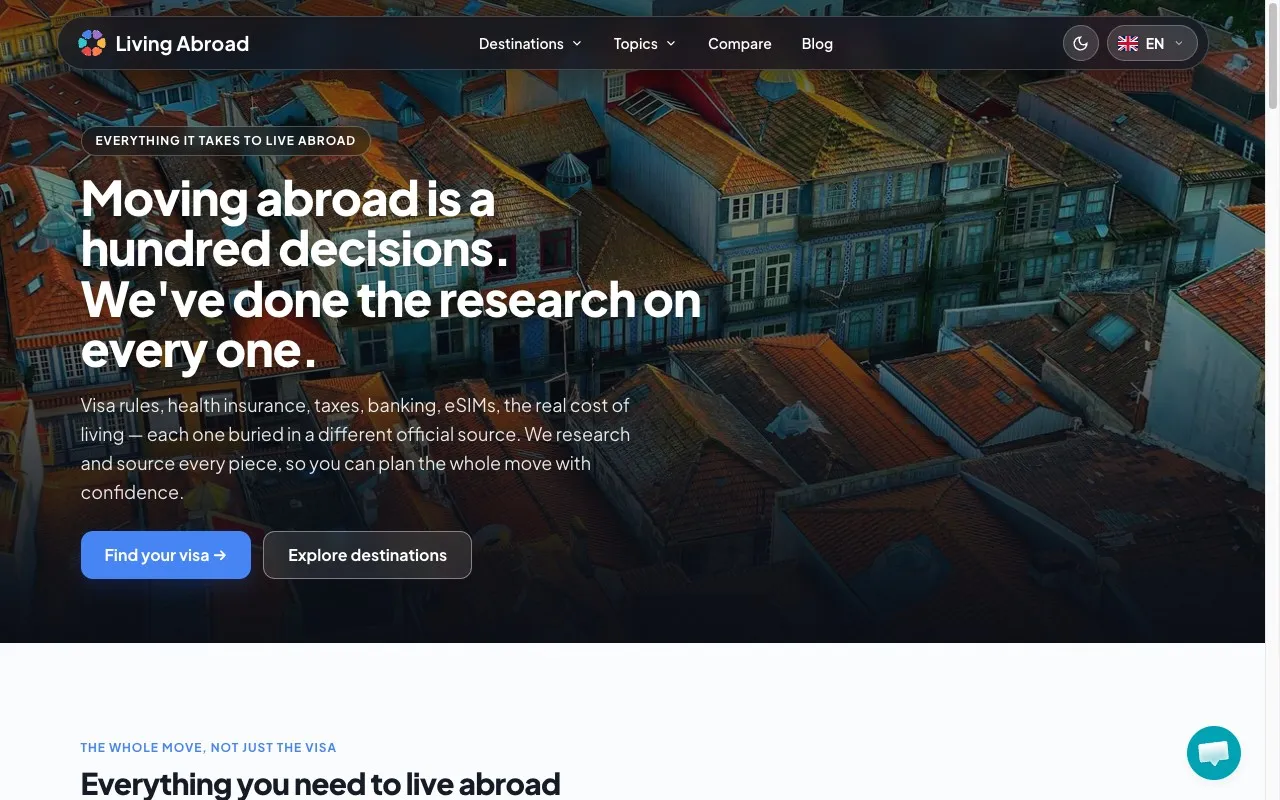
Inside living-abroad.org: arriving in your new country
Registration, housing, bank account, daily life: www.living-abroad.org guides you through the first weeks abroad. What the portal offers — and what it doesn't.
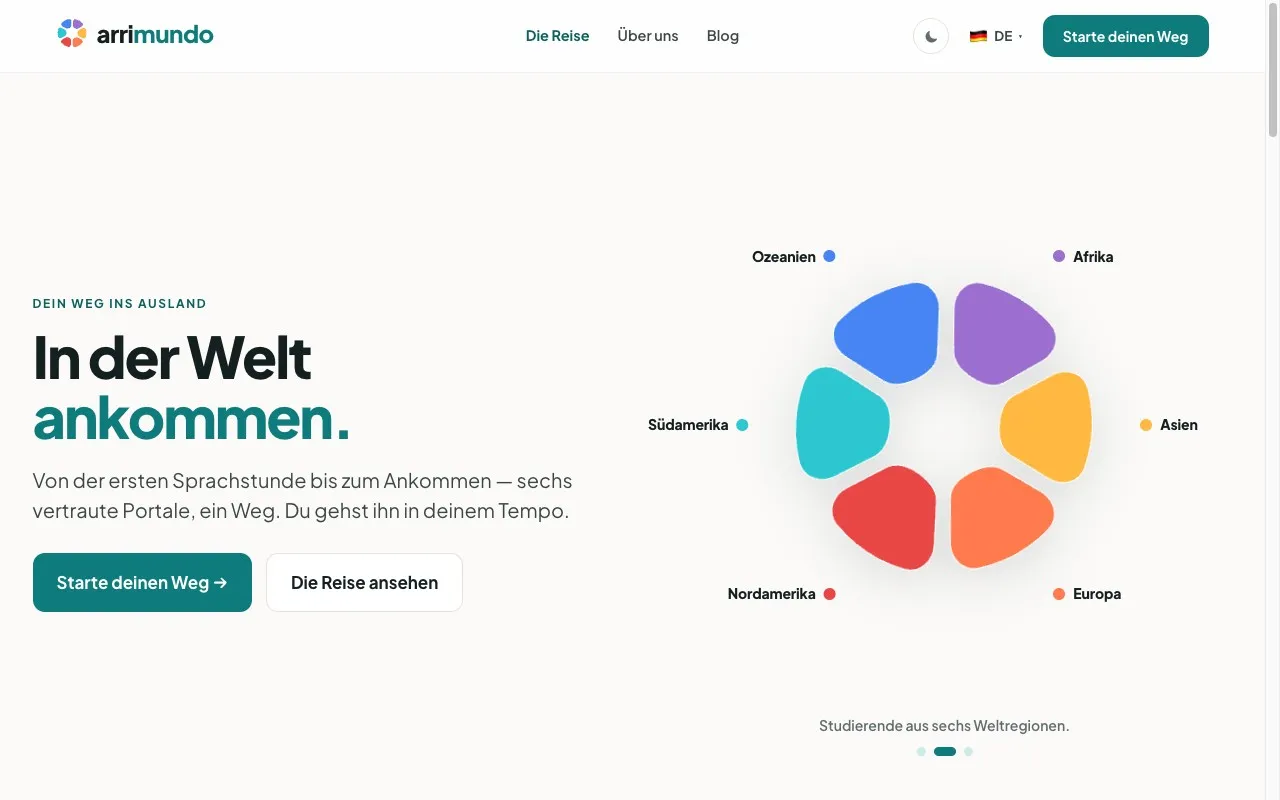
Why arrimundo exists: six stops, one path abroad
Six topics, six points of contact, one foreign language: the path to studying abroad is fragmented. Why arrimundo connects it into a single journey.
Your study abroad timeline: 18 months, six stops
From comparing countries to registering in your new city: a realistic study abroad timeline in five phases — with the right portal for every step.
Ready for the next step?
Six stops, one path — find out where you stand right now.