
Your study abroad timeline: 18 months, six stops
From comparing countries to registering in your new city: a realistic study abroad timeline in five phases — with the right portal for every step.
On this page
Studying abroad isn’t one big step. It’s lots of small ones: choosing a country, learning a language, proving your funds, gathering documents, arriving. Try to think about all of it at once and you’ll quickly feel overwhelmed — and end up putting everything off.
A timeline takes that pressure off. You don’t have to do everything at once, only what’s due right now. Everything else has its fixed place further down the line. That’s exactly what this guide is for: five phases, counted back from your planned departure, each matched to the right stops on the arrimundo journey.
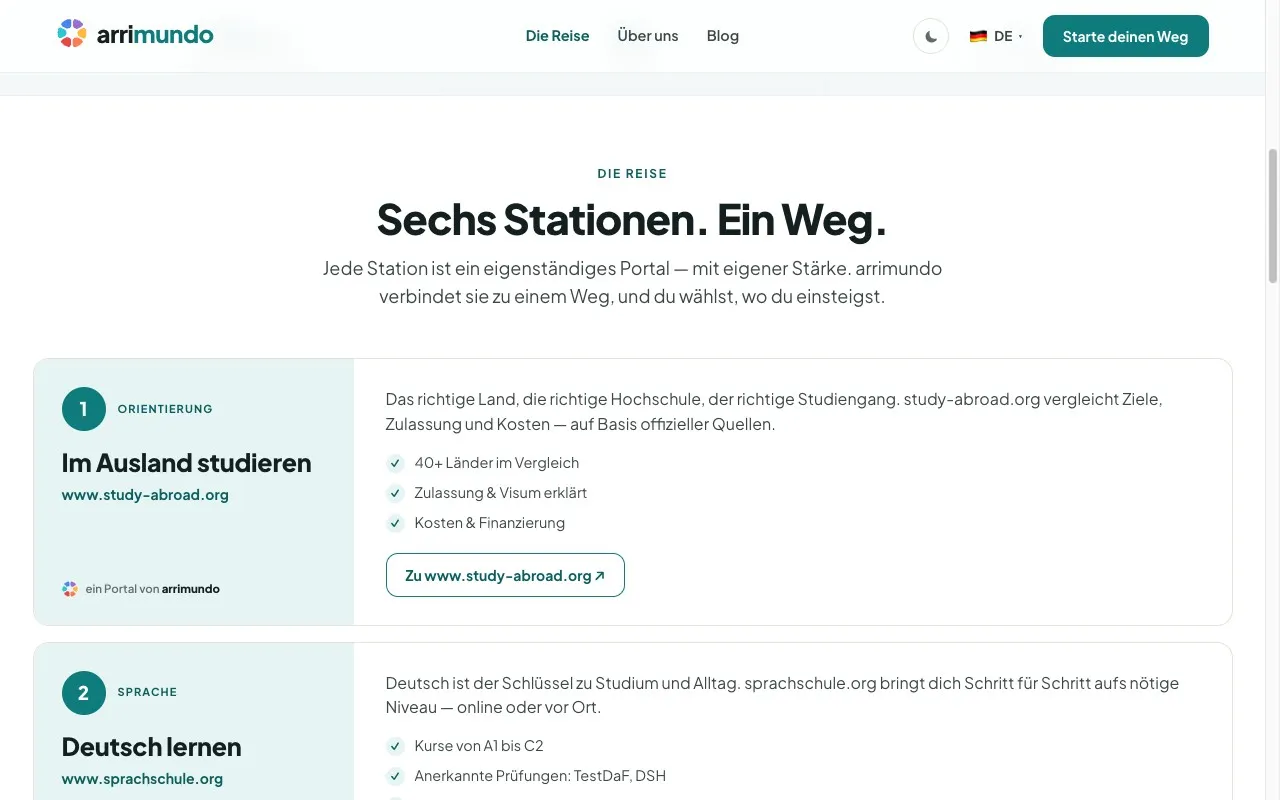
Three things up front. First: the timeframes are a rough guide. Deadlines and processing times vary by country, university and embassy — always check specific dates with the official body. Second: some stops are typical of the route to Germany, such as the blocked account or the Studienkolleg. If your path leads to another country, the details change — the order stays much the same. And third: compared with the journey on our homepage, this timeline swaps two stops — Preparation comes before Funding here, because the blocked account only comes into play once you’re admitted.
18 to 12 months out: orientation and first language lessons
It starts with the big questions: Which country? Which university? Which programme? And, honestly: what does it all really cost?
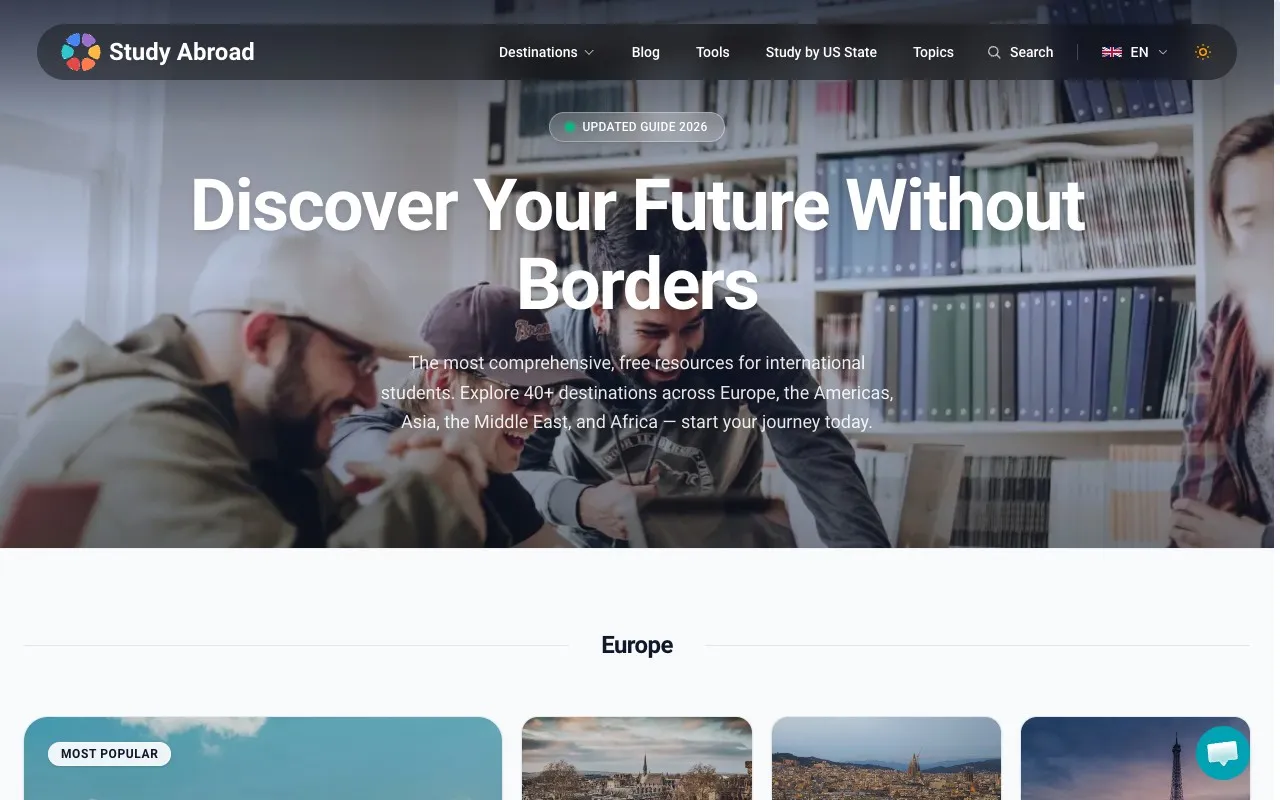
Give this phase time. Compare two or three countries properly instead of ten superficially. study-abroad.org helps you do that with country guides to over 40 study destinations — admission, visas, costs and funding, based on official sources. With the free study cost calculator, you can play through budgets for 12 countries and 39 cities without signing up.
Budget cautiously rather than optimistically. Studying abroad costs more than tuition: rent, insurance, daily life, a safety cushion. One example: for Germany, the Germany guide on study-abroad.org puts living costs at roughly €850 to €1,400 a month, plus a semester fee of around €100 to €400 at many universities. Numbers like these give you a feel for what’s realistic. If the budget doesn’t stretch to destination number one, it’s better to know that now — not a year later.
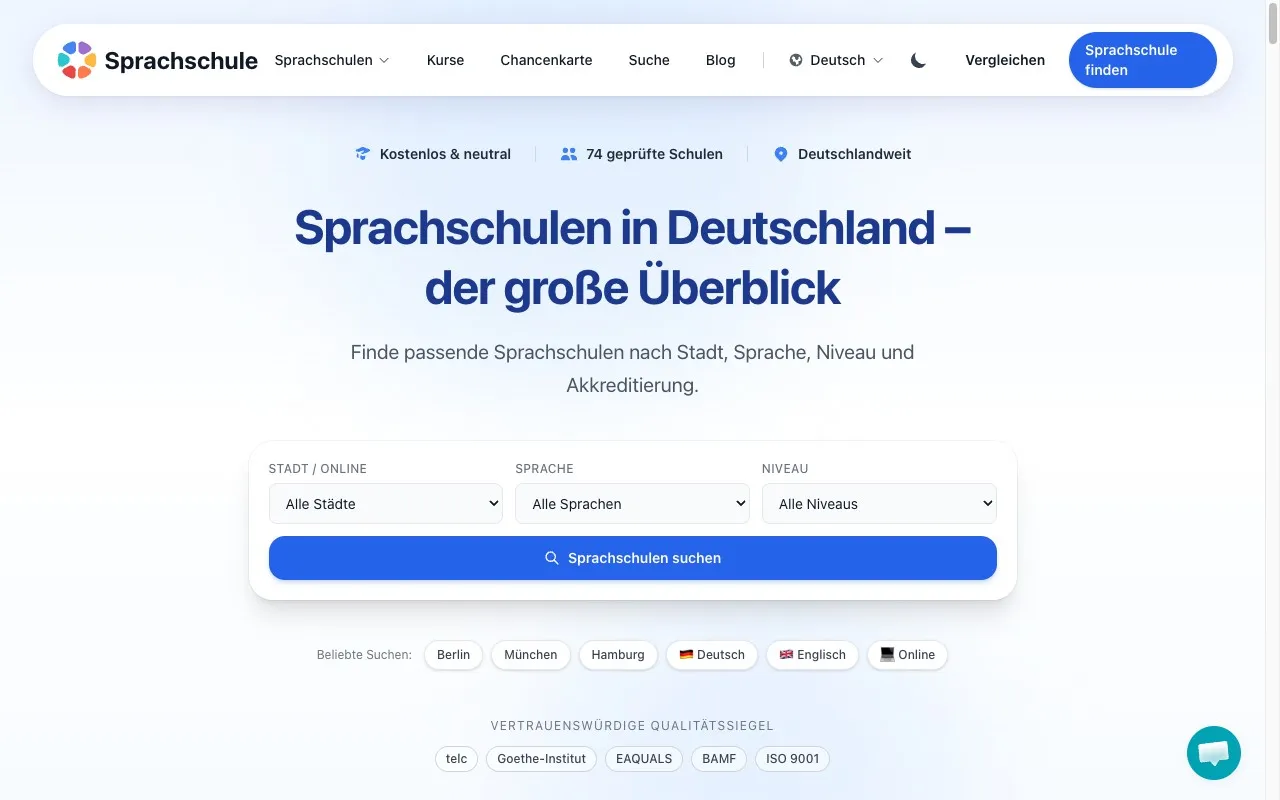
And start on the language, ideally right away. Reaching a new language level takes months, not weeks. If you need German for your studies, sprachschule.org lists 74 vetted language schools across Germany — filterable by level (A1 to C2), federal state and teaching format, whether in person, online or hybrid.
What belongs in this phase:
- Narrow down your country, university and programme
- Work through your budget realistically
- Start a language course and pin down your target level
12 to 6 months out: applications and study preparation
Now things get concrete. Check the admission requirements of the universities on your shortlist — and settle one question as early as possible: is your school diploma enough for direct admission?
In Germany, that’s not a given. If your diploma falls short, the route runs through a Studienkolleg (preparatory college): usually one year of preparation across two semesters, with the Feststellungsprüfung (qualifying assessment) at the end. That’s no small thing — it pushes your study start back by about a year. Better to know early and plan for it than to be caught out later. On studienkolleg.org you can compare 46 public and private Studienkollegs, with all nine course types explained and over 100 sample exams to practise with, most of them free. Good to know: public Studienkollegs generally require German at B1 level, and the entrance exam mainly tests German and maths. Costs also differ considerably: public Studienkollegs are usually free apart from the semester fee, while private ones charge several thousand euros per semester — that belongs in your budget maths from phase one.
The language work carries on in parallel. Find out now which exam your university recognises — TestDaF, DSH, telc or a Goethe certificate, say — and register for it in good time. The guide section on sprachschule.org explains the differences between the certificates.
And then the application itself: gather your documents, have your certificates translated, note the deadlines. Every university has its own dates — put them in your calendar as soon as you know them, and allow a few weeks’ buffer for translations and certified copies.
What belongs in this phase:
- Check admission requirements and plan for a Studienkolleg if needed
- Choose your language exam and register
- Prepare and submit your application documents
6 to 3 months out: money, insurance, visa
Once your admission is in, the paperwork phase begins. For a German student visa you have to prove that your first year is funded. The usual route is the blocked account: for 2026, the standard amount is €11,904 — after arrival, €992 of it is released to you each month.
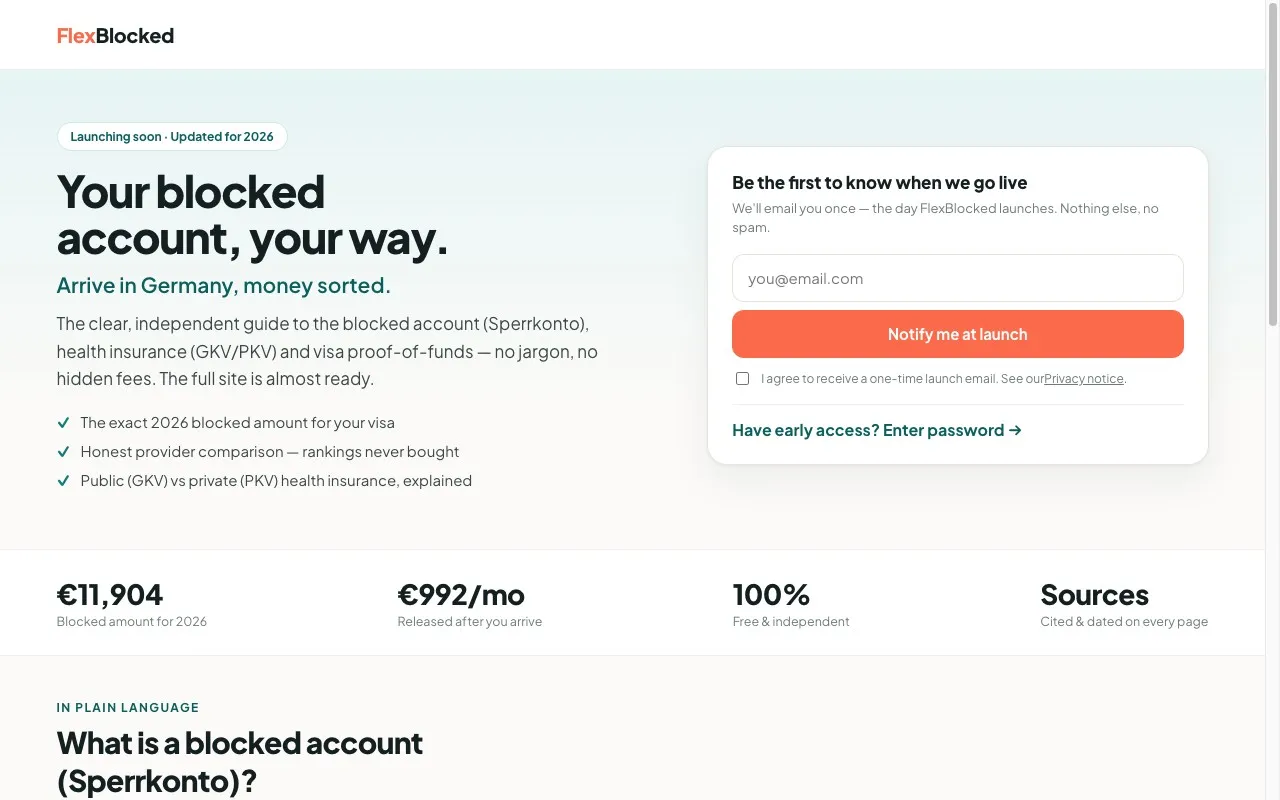
We’ll say it like it is: that’s a lot of money. If family or a scholarship are meant to help, talk early about how the amount will come together — not once your visa appointment is already booked. flexblocked.com is launching soon and will explain the blocked account, proof of funds, health insurance and current accounts independently and without the jargon — the landing page already shows the key 2026 figures, and you can sign up to be notified at launch. Always confirm the exact amount for your visa with the embassy responsible — it can differ depending on the visa.
The second must-do: health insurance. In Germany it’s compulsory for all students — no proof, no enrolment. For students under 30, public insurance costs around €141 a month (as of 2026). student-insurance.com compares visa-compliant plans for 35 destination countries and, for Germany, explains the difference between public and private insurance.
Then the visa itself: book your appointment as soon as your documents are complete. Processing times vary widely by country, embassy and time of year — here, early always beats cutting it close.
What belongs in this phase:
- Set up your blocked account and deposit the funds
- Take out health insurance and secure the certificate
- Book your visa appointment and submit your documents
The final weeks: sorting, not scrambling
Little that’s new comes up just before departure — now it’s about keeping everything together.
- Put together a document folder: passport, admission letter, blocked-account confirmation, insurance certificate, school certificates — each with copies, plus digital backups.
- Sort out a first place to stay for when you arrive, even if it’s only a stopgap.
- Book your journey and work out how you’ll access money in the first few days.
If you’ve worked cleanly in the months before, this phase is above all one thing: calm.
After you land: arriving, step by step
Your first weeks in the new country have a to-do list of their own: registering with the authorities, opening a bank account, finding a place to live, enrolling at the university. That’s exactly what the sixth stop of the journey is for: living-abroad.org guides you through registration and dealings with the authorities, housing and a bank account — and through what comes after: daily life, language and community.
Your blocked account starts working for you now too: the €992 per month is released after arrival and covers your running costs. And to enrol at the university you’ll need the insurance certificate from phase three — good thing it’s in your document folder.
Because arriving is more than paperwork. The forms are done within a few weeks. Truly feeling at home takes longer — and it’s just as much a part of the journey as everything before it.
Your checklist at a glance
| When | Stop | What matters most | Portal |
|---|---|---|---|
| 18–12 months out | Orientation | Settle on a country, university and budget | study-abroad.org |
| 18–12 months out | Language | Start a language course, set your target level | sprachschule.org |
| 12–6 months out | Preparation | Check admission, Studienkolleg if needed, language exam | studienkolleg.org |
| 6–3 months out | Funding | Set up your blocked account (€11,904, as of 2026) | flexblocked.com (launching soon) |
| 6–3 months out | Coverage | Take out health insurance, apply for your visa | student-insurance.com |
| The final weeks | — | Sort your documents, settle housing and travel | — |
| After arrival | Arrival | Registration, bank account, housing, daily life | living-abroad.org |
A plan that moves with you
No timeline survives reality unchanged. An offer arrives late, an exam gets postponed, an appointment falls through. That’s normal — what matters is that you always know what comes next.
That’s exactly what arrimundo is for: six independent portals, connected into one path, so you can always see where you stand. To find out why we built the path this way, read our article on why arrimundo exists. And if you want to start today: stop one is Orientation — compare your destinations on study-abroad.org.
Keep reading
Inside study-abroad.org: where your path abroad begins
study-abroad.org is stop 1 on the arrimundo journey: free guides to 40+ study destinations, two calculators and facts from official sources to get you started.
Inside sprachschule.org: finding the right language school
Stop 2 on the arrimundo journey: sprachschule.org helps you find and compare language schools in Germany — free, neutral, and with real numbers.
Inside flexblocked.com: the Funding stop
Blocked account, health insurance, proof of funds: www.flexblocked.com explains the money side of the German visa — free, honest, and jargon-free.
Ready for the next step?
Six stops, one path — find out where you stand right now.